Kieran Brown
November 2022
Victory will change the Caucasus region.
At the Dawn of a New Era
The outlook of the political leadership and their social media networks in Azerbaijan are undergoing a transformational period right now, as the nation’s definition of its place in international relations expands beyond past conflict patterns.
In the three decades which have followed the fall of the Soviet Union, violence prevailed between ethnic Armenian separatists and the security forces ordered by Baku in a small area known as Karabakh. The reconquest of much of this territory during Azerbaijan’s 2020 military campaign seems to have led its leadership to focus more of its enmity toward Iran than has ever been previously demonstrated in my recollection.
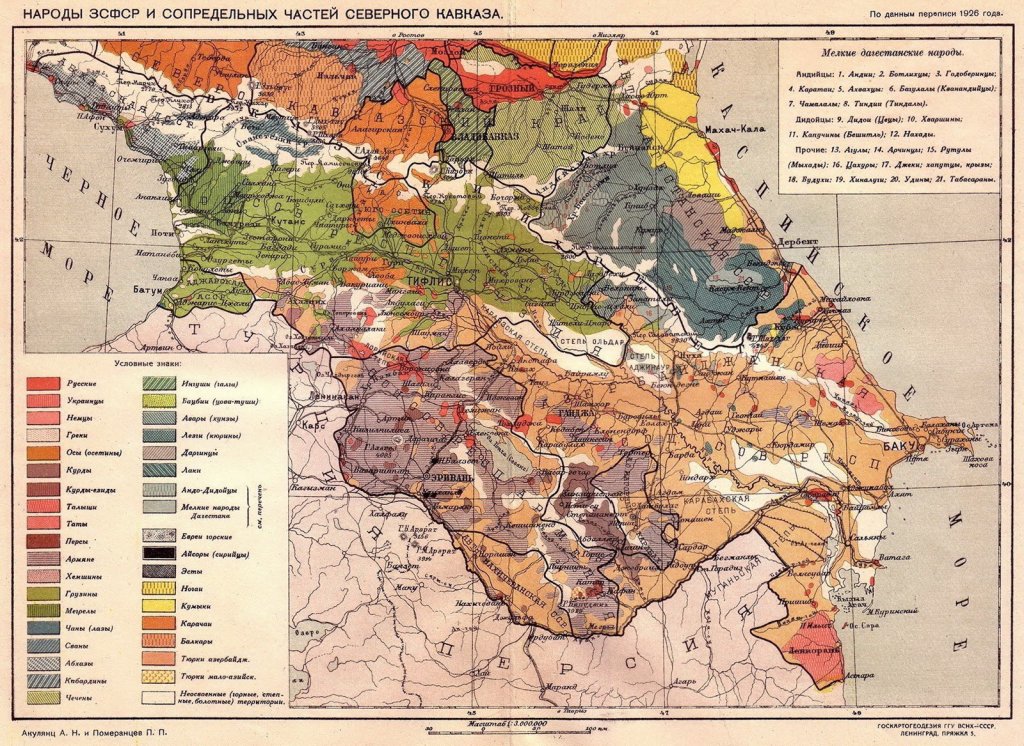
The conflict with Armenia has traumatic repercussions for numerous trade routes as a result of the ever-changing political landscape. The regular people that inhabit Azerbaijan are a major focal point in this research, but to understand the collective strategic culture that guides their nation in times of crisis, I used social media intelligence, consulted academic research in four languages, utilized Soviet ethnographic maps from 1926 with air traffic data, and synthesized publicly available U.S. Army research relating to Azerbaijani military positions into Google Earth KMZ files.
In the course of this research, the emergence of a new national narrative that challenges Iran by claiming to respect the sovereignty of South Azerbaijan is revolutionary in Azerbaijan’s assertive tone.
Strategic Outlook: Contextual Understanding
- The domestic audience of Azerbaijan was previously enraged by the military’s ineptitude in defense of their land during the first escalation. Within the first year of Azerbaijani independence, the nation’s leadership was threatened by the conflict in Karabakh, as the then Armenian-held zone accounted for 13.63 percent of de jure Azerbaijan— an offensive occupation of seven surrounding territories which separated the enclave from its protectors in Armenia were overtaken. In the complicated world of international diplomacy, Azerbaijan sought to bring its case for adjudication before mediators from major powers like the United States, France, and Russia.
- Political activists in Azerbaijan have significant leeway in their support for the ongoing protests in Iran. As the internal security situation is likely to become less burdensome for Azeri strategists, the bilateral relationship with Iran is bound to become much more directly competitive. Azeri people make up a sizable minority of the Iranian populace, “there are more Iranian Azeris living in Iran than there are Azerbaijanis in Azerbaijan itself,” so Iran is bound to feel insecure as widespread protests continue to engulf their country. The tensions with Iran have not necessitated direct military confrontation in the past, but as the equilibrium has shifted away from Armenian dominance toward an empowered Azerbaijan this may be the most critically important relationship for the future of Azeri foreign policy.
Assessing the Audience
The domestic audience of Azerbaijan is incredibly sophisticated but very dissimilar in their perceptiveness from Americans. Given their history as Soviet subjects, the expression of Azeri nationalism is fascinating because it is revolutionary. While their internet traffic is mostly conducted in the native language and less so in Russian or Turkish, modern computing enables me to translate directly from sources on social media websites like Twitter, government information from official sources like the Ministry of Emergency Situations, and from traditional publishing outlets like AZERTAC.
In order to develop a network of sources, I created @defensehockey to engage with the Azeri worldview , to discover if I could capture sentiment from a diverse array of citizens. After some serious time dedicated to developing this account, it is now followed by diplomatic representatives of Azerbaijan to Pakistan, members of the Dövlət Gömrük Komitəsi (State Customs Committee), a journalist from Qafqaz.az, and multiple regional organizers of the Young Azerbaijan Party (YAP).
In the months spent gathering this material, I made frequent contact via retweets and likes and shared information which I believe accurately captures some of the sentiment of the Azeri people. More specifically, this effort utilized social networks as an integral component in this study of Azerbaijan’s leadership class.
Roadblocks to Peace Ahead
Summarily, the conflict in Karabakh disincentives political compromise because neither Azerbaijan nor Armenia are willing to cede this land; both sides are intangibly motivated by the historical value which underlies the sense of legitimacy for both governments. For the Armenian side, this area is a testament to their regional longevity, the preservation of ancient Armenian settlements is considered integrally important to their domestic audience. On the Azerbaijani side, once existing settlements in the area where their people lived have been destroyed during the course of a devastating annihilation of their communities.
This conflict is incredibly difficult to explain because in addition to the contested land of Karabakh, there is yet another exclave known as Nakhchivan which is separated from the rest of Azerbaijan. In an interesting phenomena, the leadership of the Azerbaijani government has extraordinarily close familial linkages with the region. In past attempts to create consensus for diplomatic exchanges of peoples, one American proposed a land swap between Armenia and Azerbaijan which would enable both to access their peoples in these regions. While this is purely speculative, one has to wonder if such a plan would be empowered by the political classes of these combative rivals or if peace would threaten the authority that they legitimize by provoking this mutual enmity. In the case of Azerbaijan, there are societal norms which vastly differ from the American context as it relates to the use of force and to what we term civil liberties. Considering the context of the dangers that displacing hundreds of thousands of people will cause, the extraordinary measures undertaken by Azerbaijan officials when dissidents raise their voices must be understood as an authoritarian norm where encroachments on civil liberties can be tolerated when taken as a consequence of the dire situation.
To adequately summarize the Azerbaijani position, one must recognize that the strategic culture is defensively oriented and that the forces which mold its geopolitical posture are generally considered to emerge from Armenia, Iran, and Russia in descending order from most to least concerning.
The Importance of Heydar Aliyev
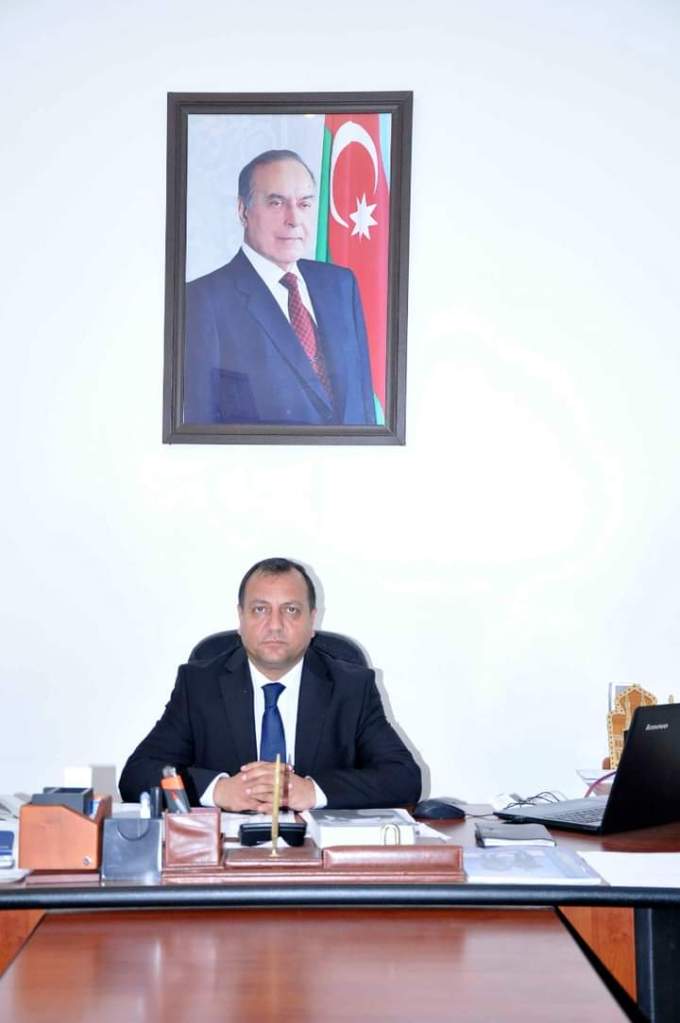
Within the context of the 1994 defeat, the Azeri government curtailed specific normative republican ideals like the freedom of speech and political competition as limiting factors. Heydar Aliyev was a Soviet apparatchik that had longstanding ties to the KGB. “He made his career in the Stalinist secret police; an NKVD lieutenant at the age of eighteen, he rose to become the head of Azerbaijan’s KGB in 1960 and the republic’s first party secretary nine years later. [Aliyev’s] preferred political method [was] total control.” Heydar succeeded in skirting responsibility for the excesses of Communism while deriving benefits as the longstanding First Party Secretary of Azerbaijan for decades. As that system failed, he was able to reconstruct a basis of political influence by remaining ambivalent toward peace negotiations and criticizing his opponents for their failure to protect Shusha.
Heydar Aliyev took control over Azerbaijan by presented himself as the only person capable of reconquering Azerbaijan’s lost villages and returning folks living in refugee camps back to their ancestral lands. Once the Soviet Union collapsed, Aliyev waited while the anti-Communist forces failed to capitalize on their newfound authority. At a particularly critical juncture, after the fall of Shusha had occurred, Aliyev argued the Azerbaijani Popular Front was insufficiently able to defend Azerbaijan from Artsakh and Armenia.
To understand the ‘staying power’ of Heydar Aliyev’s cult of personality is to fully grasp the former Soviet system’s desire to internationalize its system of government, as well as the long reach that affiliates of the Soviet intelligence services continue to cast. Astute observers of the Caucuses compare similarities between Azerbaijan’s autocratic system of “parliamentary democracy” with the siloviki model, which characterizes contemporary Russia’s reliance upon senior elements in the defense and intelligence services.
Aliyev’s ties to Nakhchivan are symbolically important in that his service representing this exclave constituency in the Soviet Union was the stepping stone that propelled him to national prominence. While the fledgling government of independent Azerbaijan sought to quell anti-Communist sentiment and the countervailing nationalist movement struggled to chart an independent path from the prior ASSR (Azerbaijan Soviet Socialist Republic) framework, Aliyev presented his candidacy as an alternative to ideologues (Abulfaz Elchibey) and tyrants (Ayaz Mutalibov), the only one who had the courage to guarantee the eventual return of all occupied territories as the foremost test of his legitimacy.
Although Heydar Aliyev died nearly 20 years ago, his son Ilham Aliyev continues to enshrine his father’s legacy into the very heart of Azerbaijan’s culture. Within the Azerbaijani government, the ruling Young Azerbaijan Party (YAP) memorializes the icon of Heydar Aliyev in nearly all facets of public life.
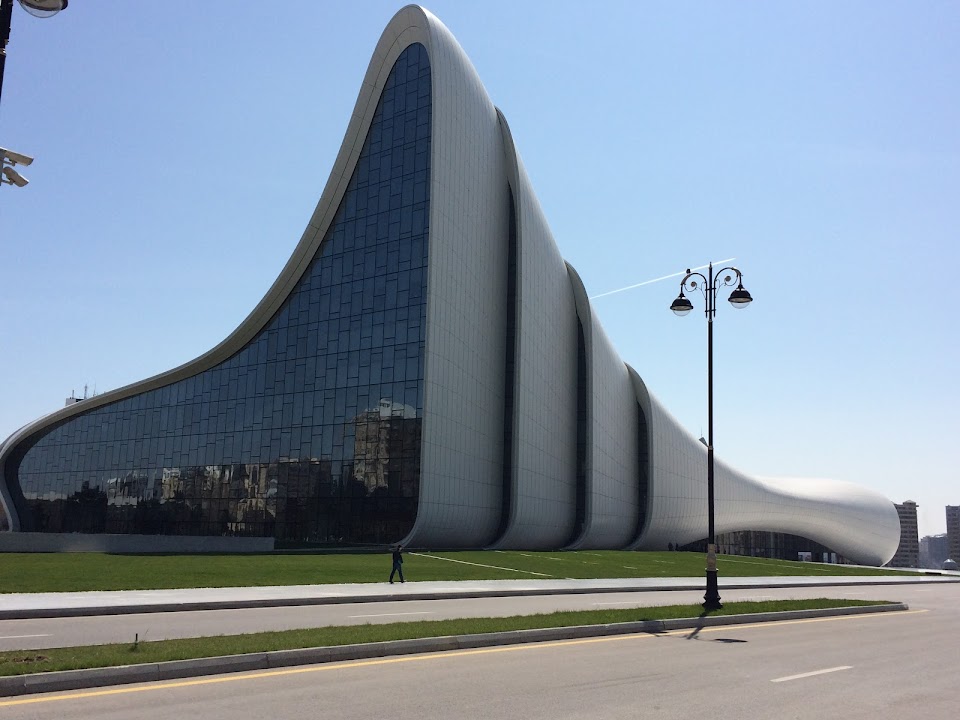
In the capital city of Baku, the major airport, the largest convention center, and numerous roads and monuments have been dedicated to Heydar Aliyev. In an illustrative manner, the main thoroughfare which bisects Baku is named “Heydar Aliyev Avenue” which has come to replace its former name of Moskva Avenue. When international guests are invited to collaborate with Azerbaijani officials, honorific remembrance ceremonies for the former leader are commonplace.
In the majority of instances, international collaboration is undertaken by Azerbaijan with the purpose of state-building, while their leaders hope to remain sufficiently unconstrained by larger geopolitical forces on the critical issues of energy production and national security. Perhaps as an effort to show their unyielding devotion to the Azeri state, or as a proxy test of willingness to oblige their historical legacy, the current government has cultivated a nearly mythical omnipresence for their third President, a reality which supplementarily worked to solidify the understanding amongst the people that Ilham was to make good on his father’s promise.
But before we can explore this strategic change in Azerbaijani history, we must understand the forces which excelled in previously enabling Armenia to exert leverage over the diplomatic community and to have taken such a large swath of Azeri territory without legal standing. Although the degree of assistance provided by the Soviet Union to Armenian operations in the First Nagorno-Karabakh War is contested and complicated by Operation Ring [an assistance program to help Azerbaijan counter Armenian militants for a brief period], the single largest force multiplier for Armenia is the incredibly engaged diasporic populations in France and the United States.
According to diplomatic cables from the American embassy, Baku considers the Armenian lobby instrumental in promoting unfair appraisals of the situation in ways which denigrate the standards of international law. In these Western nations, the political interests of this bloc of influential voters have cultivated diplomatic vigor for a multilateral peace arrangement. Amongst some American politicians, some of whom I have discussed this issue with directly, there is even a feeling that despite the illegal status of the Republic of Artsakh that they had deserved independent representation in such a settlement.
This would effectively have led to an imbalance of power only equalized by also inviting the Azeri refugees from Nagorno-Karabakh as similarly equal partners in such discussions. Such a convoluted negotiating position, that neither side deserved unbalanced representation in this settlement, apparently fell upon deaf ears.
In the intermediary years between 1994 and 2020, the primary vector for such talks was the Organization for Security and Cooperation in Europe’s (OSCE) Minsk Group. This structural arrangement sought to provide balance between the interested parties by having Russian, French, and American diplomats engage Azeri and Armenian leaders directly and by providing hypothetical arbitration in the event that the parties could agree to terms for a possible peace deal. This idealistic working group was repeatedly stifled by the preconditions that each side presented.
In no small part, the deadlock resulted from the unwillingness of Ilham Aliyev to negotiate terms in which any Nagorno-Karabakh territory was granted independence or conjoined with Armenia.
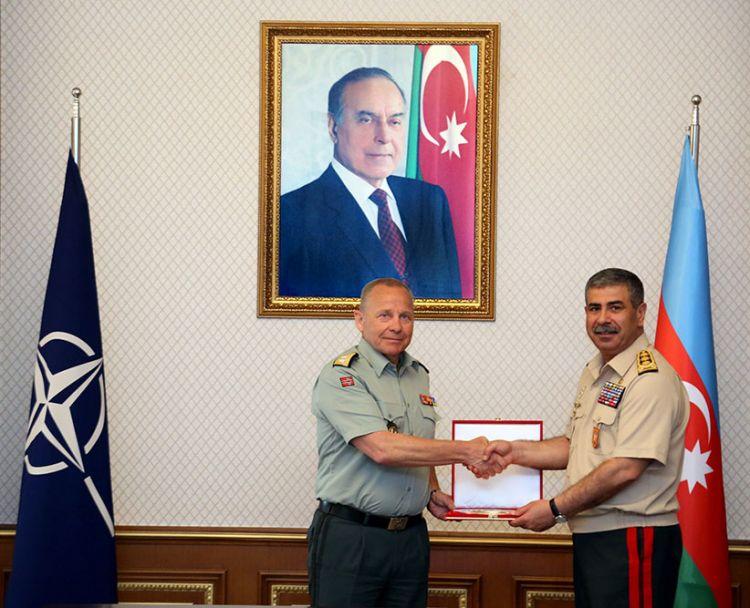
With such an unwavering position, these meetings became sounding boards for domestic opinion-making and occasional saber-rattling.
Now this is not to suggest that all multi-lateral peace summits are bound for failure, but that the core tenet of trust was missing from these negotiations as a result of the prevailing belief in Azerbaijan that the foreign powers were unduly swayed by the influence of their Armenian supporters.
Since this understanding was openly recognized by Ilham Aliyev, most notably in the diplomatic quarreling with French politicians, the situation in Nagorno-Karabakh necessitated a military escalation to alter the status quo since no peace deal would seriously respect Azerbaijan’s legal position. During this period of stagnant peace negotiations, the Azerbaijani government began to gather the sufficient resources of war to retake nearly 20% of their territory. This is a testament to the strategic initiative and preparedness with which the Second Nagorno-Karabakh War of 2020 was conducted.
American military analysts have expended considerable resources in assessing the causes of this operational success. Perhaps the best post-mortem has been provided by Edward Erickson, a Lieutenant Colonel who that suggests that “the success of Azerbaijan’s 2020 campaign in Karabakh was the result of a sustained period of professionalization in its military institutions and complementary acquisition decisions.” In particular, the Azerbaijani leadership was able to procure material support from Israel and Turkey, which enabled the Azeris to take the strategic initiative in this reconquest campaign by utilizing advanced technologies like satellites and ballistic missiles.
More importantly, there existed within the regional geopolitical environment a monumental shift to the security environment in which Armenia had solidified earlier claims to these territories. The most important precondition for Ilham Aliyev’s country to make their move rested upon Moscow’s intentions. In the tumultuous glasnost and perestroika era, the Soviets made clear that they were willing to defend the interests of Armenia. During the initial stages of conflict, Soviet forces were deployed to quell anti-Armenian violence in Sumgait, a city just outside of Baku. At a later date, the Soviet leadership under Mikhail Gorbachev authorized Operation Ring, which was meant to assist Azerbaijan ‘black berets’ into looting and terrorizing Armenians. “[Operation Ring] reflected Moscow’s determination to reinforce its control over Azerbaijan and to frustrate Armenian moves toward full independence.”
While the historical pressures which compelled the collapse of the Soviet Union made nationalism in the Caucasus a tolerable social behavior, it also worked to link Armenian security directly to the Russian peacekeepers meant to preserve order in the Lachin corridor. This reality consequently guaranteed that Armenia was to become a staunch supporter of the Commonwealth of Independent States, the Post-Soviet security pact. Despite this warm security arrangement, there were a number of factors which limited the willingness of Russia to intervene in this conflict.
Forthrightly, the international recognition of Nagorno-Karabakh as legally bound to Azerbaijan diminished the defensive element of this obligation. Perhaps more consequentially, the Russian military establishment likely did not want to create hostility with an autocratic partner, lest such a provocation create a window of opportunity for the Western color revolution interfere at great expense to modern Russia considering Azerbaijan’s proximity to Dagestan and Chechnya. It is commonly argued that Russia’s SVR (Foreign Intelligence) maintains a special relationship with Azerbaijan’s Dövlət Təhlükəsizlik Xidməti (State Security Service) and Azərbaycan Respublikasının Xarici Kəşfiyyat Xidməti (Foreign Intelligence Service). Whether or not the degree of collaboration extends to the level suspected by cautious Western observers, this intelligence sharing arrangement alone was insufficient deterrence to outweigh Baku’s calculated benefits in terms of the legitimacy to be derived from retaking this land.
For Russia, perhaps the most disconcerting reason to avoid this conflict was the burgeoning proxy conflict that pitted its mercenary forces and their allies into engagements in Syria and Libya against Turkish-backed forces. Experts which have assessed Turkish interests consider Azerbaijan a prime target for an extended sphere of influence, and such endeavors were implicitly understood to challenge the predominance of Post-Soviet Russia in the region.
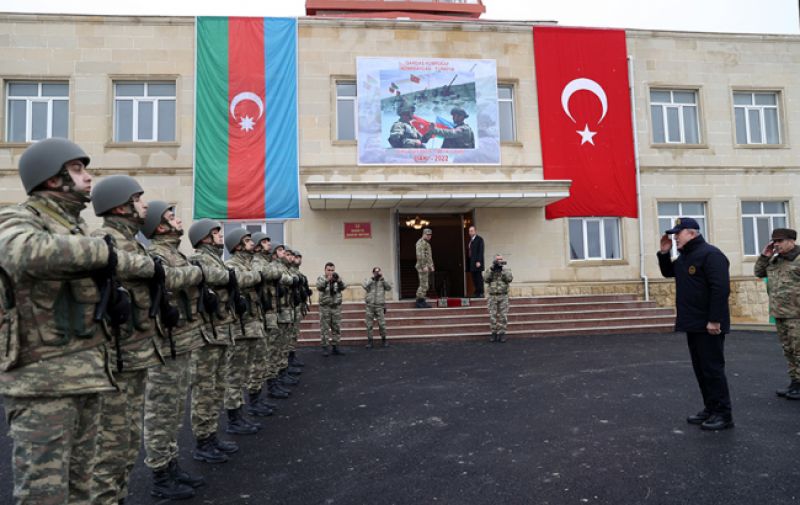
Whatever it was that compelled Russia to abstain, the resulting forty four day campaign must be studied not only from a tactical assessment of the battle space, but also from a viewpoint which recognizes some of the intrinsically important elements of this culture. My hope is that some observations can guide an outsider’s understanding of the Azerbaijani leadership, more specifically their motivations and intentions in a manner which cannot be simulated or otherwise replicated but merely interpreted. The best way I can do that is to introduce the audience to the Khari-Bulbul (Xarı Bülbül).
Shusha is the spiritual center of the Azerbaijani struggle to reconquer Nagorno-Karabakh. This settlement was predominantly Azeri before the 1994 war, and while it was a place where Armenians and Azeris coexisted it was also a site where previous renditions of ethnic conflict led to widespread destruction of the town in 1905 and 1920. During the 2020 war, the Azerbaijan military was filmed during its incursion into the occupied settlement, and this was distributed across the internet in an attempt to garner support for the Azeri government. In addition, contemporary historical narratives are already being dispersed in foreign languages with specific regard to the “Operation Shusha”.
The symbolism of the Khari-Bulbul rests in the fact that it is a flower which grows in this occupied area, and the mythology went that they would no longer grow until Azerbaijan retook Shusha. Demonstrations of this symbol became a more refined way to show support for the military actions, the realities which may at times be too gruesome for the domestic population to witness and internalize. Nevertheless, social media intelligence derived from Twitter can be used to actually map out to some extent the degree of hard-liner acceptance of blatantly heinous war crimes.
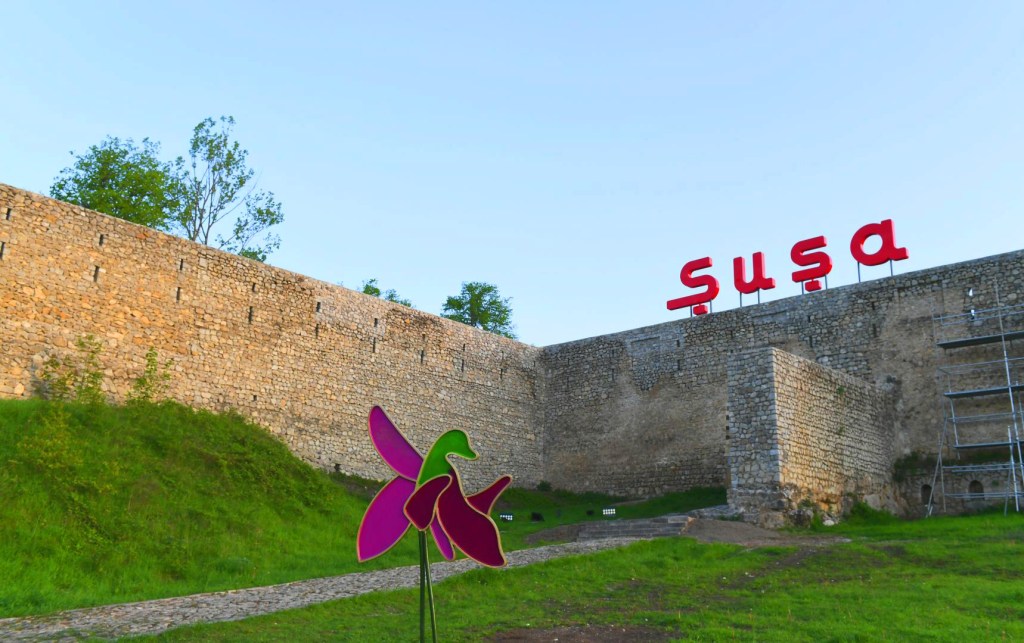
In the immediate days which followed the escalation of the Second Nagorno-Karabakh War, foreign observers began to recognize a concerted effort on the part of the Azerbaijani government to cultivate this narrative of redemption in the parable of this flower. Throughout the world, diplomatic envoys began to wear purple lapel pins with this information operation an extension of the desires of the Baku government to embolden nationalist sentiment in pursuit of their political goals of wrestling control over Nagorno-Karabakh, and specifically Shusha, from Armenian occupation.

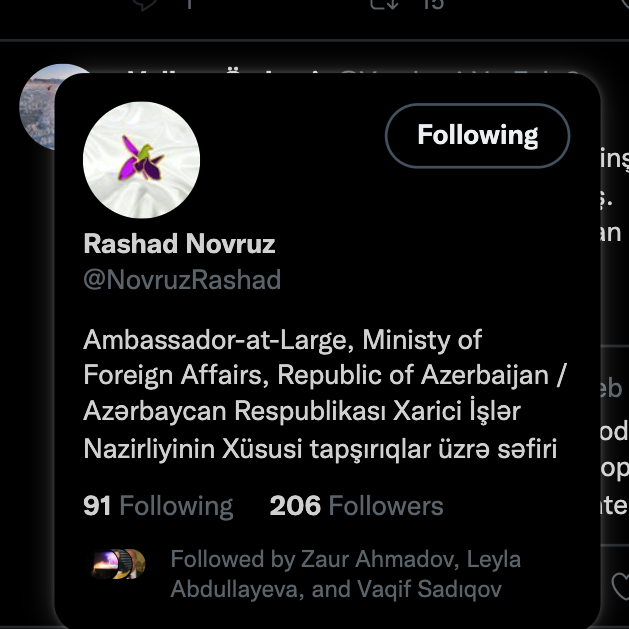
In another example, the highest ranking diplomatic representative of Azerbaijan, Rashad Novruz, changed his Twitter profile picture to the Khari-Bulbul. These are sophisticated and coordinated shows of national pride that ultimately represent the culmination of a triumphant chapter in Azerbaijan’s early history as a Post-Soviet state. Undeniably, Azerbaijan is bound to remain geopolitically important as a result of its oil and natural gas reserves. The future of this nation is very likely to remain intertwined with Turkey, but will also likely become directly competitive with Iran as Armenia attempts to recover its internal stability in the wake of defeat.
The Iranian threat has always been looming in the minds of the Azerbaijani security establishment, but given the more pressing nature of the conflict with Armenia this was tabled until a latter date. In addition to the aforementioned worries about demography, a real Iranian issue exists in the partnership between Azerbaijan and Israel. Given the fact that American analysts have assessed that Azerbaijan’s victory was influenced by technological transfers from Israel, it seems likely that the intelligence services of Iran are pursuing such intelligence questions for reasons of preserving their own territorial integrity.
In conversations more than a decade ago, Foreign Minister Elmar Mammadyarov explained to Congressman Adam Schiff that there was room for collaboration on Iran. Wikileaks includes examples of dealings with the Azerbaijani opposition on efforts to communicate with the Azeri ethnic minority living in Iran.
Iranian assistance for terrorist activities suggest that such weapons were being trafficked through Stepanakert, the capital of Artsakh. While the veracity of these leads are brought evermore into question by the Azeris motivations in sharing that information with our diplomatic representatives, public releases from Azerbaijan have touted a recent significant counterintelligence operation which successfully led to the apprehension of a large network of Iranian collaborators in the Azerbaijani defense forces.
“Elnur Rasulov, first directly, and then through his relative Rasulov Arif Amrah oglu, whom he involved in secret cooperation, in exchange for payment of various amounts, passed information about the unmanned aerial vehicles belonging to the Ministry of Defense and the State Border Service, which were kept at the airports and the areas where the oil and gas pipelines pass in the Garadagh district of Baku city, unmanned aerial vehicles, tanks and various military equipment, equipment displayed at the “Technofest” Aviation, Space and Technology festival in Baku, strategic and military facilities located in Baku, as well as in Salyan and Fuzuli regions, anti-aircraft missile complexes, as well as other radar and control devices by sending photos and videos to the representative of the special service body through the “WhatsApp” instant messaging system.”
Evidently, the Azerbaijani security establishment has provided an inkling as to how they are likely to shift focus in the future. In addition to this classical espionage, the Iranian services have been accused of transporting Azeris with a criminal record to Tehran for indoctrination and then to Damascus for paramilitary training.
Within this past month, these transgressions have warranted transmission of this information to the international community from the State Security Service in English. While it remains to be seen how far the Azeris will push Iran, the emergence of a culturally aware South Azerbaijan separatist movement would severely threaten to escalate conflict in what could at least theoretically lead to a coalition conflict against the Iranian Republic.
The growth of the VOSA social media channel will be an excellent indication for those interested in pursuing this avenue of inquiry. In my own findings, there has been a significant contingent of activists that have continued to probe this issue. Although this is not indicative of the elite opinion makers within the Azerbaijani security establishment, this will likely become a staple of Azeri nationalism. I can only hope that I will have the ability to continue researching this nation as it grows in international reputation.
 American Political Theorist