Despite the assertions of historical revisionists and university radicals espousing opposition to America’s values and history, the United States is the greatest country in the world.

William McKinley, in his first draft of the 1st Inaugural Address on March 4, 1897, stated that “well-paid labor fully employed is essential to true and permanent prosperity.”
Criticisms of America’s shortcomings could be made, but it is essential to recognize the virtues of the American experience and endorse the idealistic vision of government that has served as a model since the country’s inception and the impact that has had on billions worldwide. Although some argue for fundamental changes to our government, America has demonstrated its ability to overcome adversity and defend the Western world from communism and fascism while providing upward mobility opportunities domestically and exerting a positive influence on the global world order for capitalism, free speech, and religious freedom.
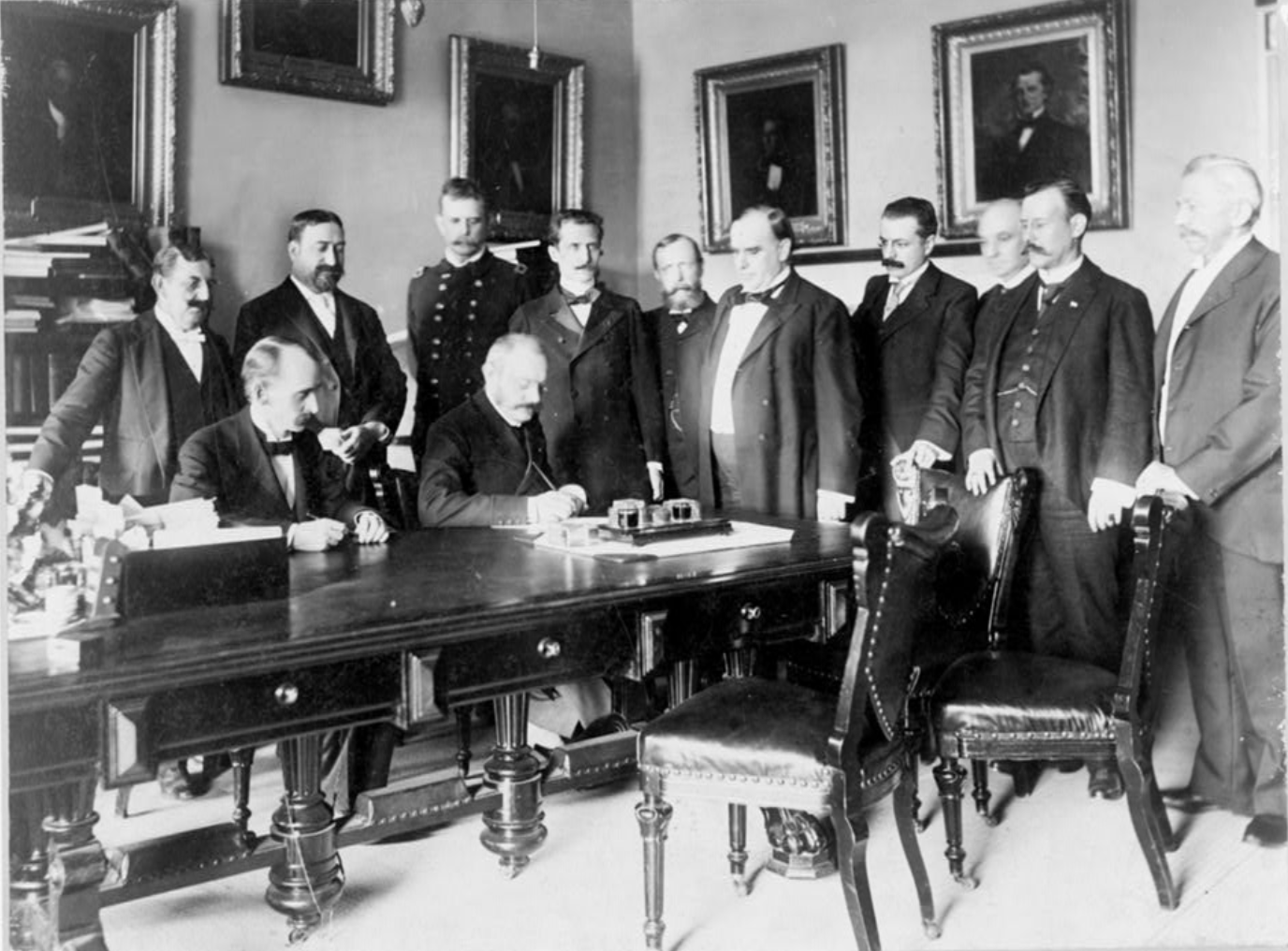
In my view, the United States has been great since at least 1896 with the election of William McKinley, which propelled the country towards greater interconnectedness with its neighbors and global powers. President McKinley, who came from a modest background, allowed his government to expand into Cuba and the Philippines, which was necessary to compel his successors to defend our national interests in times of much greater importance to the American homeland. During his tenure, President McKinley embraced a globalized perspective that was paternalistic towards subjugated populations but necessary for furthering progress in commerce and republican government models.
It is important to remember that the actions of people from a bygone era cannot be judged by modern standards. Instead, the story of a man rising from humble means to the highest office in the land should serve as an idealistic vision for future generations. The Spanish-American War solidified America’s respect from old world nation-states and enabled the country to exert influence within its regional sphere of influence. With this expansion of power, the United States played a pivotal role in defeating Hitler and stood firmly at the Berlin Wall to refuse to back down to communism.
 American Political Theorist