During the Spring Semester of 2019, I created a project as part of the Data Science for Political Science course that focused on visualizing the production of oil. By making graphs with the programming software R, I was able to show my audience the political and economic realities that exist as a result of the long reach of the energy industry. I used data collected by the Organization for Economic Cooperation and Development, which is a multi-lateral institution that is ran by the United Nations. One shortcoming, which I will address in a bit more detail later, was that the Soviet Union refused to provide their data to the United Nations which makes it impossible to consider the trajectory of the oil business in the Post-Soviet East.

As you can see, some of the most important and frequently mentioned geopolitical rivals of the United States round out the top ten list of most influential exporters of crude oil. The presence of the United States in such company is quite a new phenomena, most directly as a result of the introduction of a process to extract oil known as fracking. While much has been said on the part of alarmist opponents to American industry, the process of fracking has allowed the United States to lessen its dependence on foreign oil to sustain its economy. As a result, the competitive advantage of formerly dominant oil producers like Iran and Saudi Arabia has rapidly diminished since the turn of the millennium.
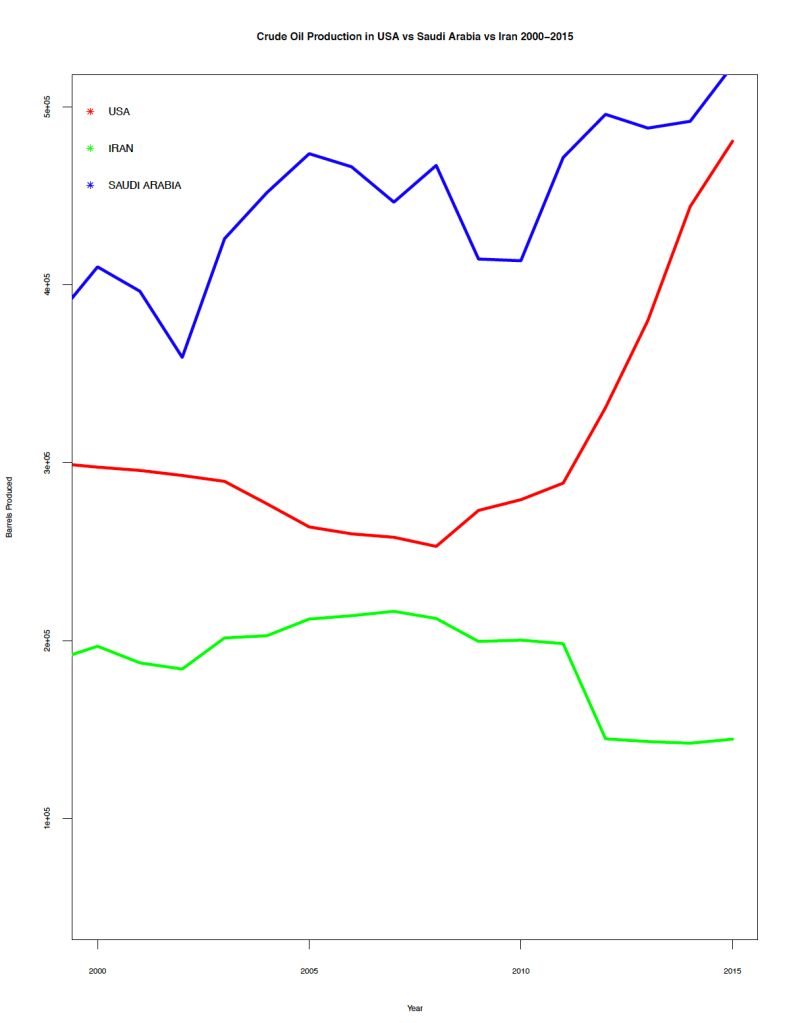
The rate of change represented by the red line is something that is hardly noticed by most Americans or the mainstream media, but for millions the energy industry represents the sort of unbridled opportunity that inspired so many past generations to tirelessly strive for upward social and economic mobility. Whether I focus on the religiously persecuted Puritans that valiantly traversed the Atlantic Ocean for a chance to worship freely, or on the thousands of people that settled in California as a result of the Gold Rush, the same sort of non-quitting spirit that has always existed in previous generations is by no means a relic of history.
 American Political Theorist